

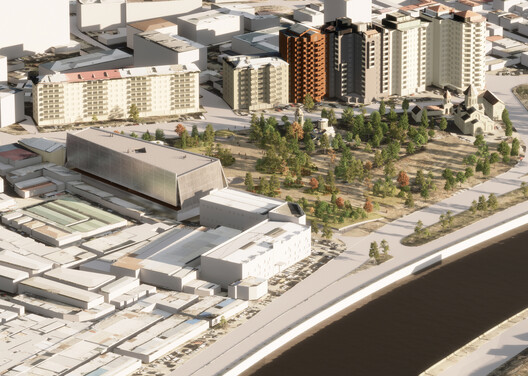
Public spaces remain some of the most dynamic sites for unbuilt architectural experimentation, revealing how cities and architects can imagine accessibility, gathering, and civic identity. In this curated Unbuilt edition, submitted by the ArchDaily community, the selected proposals examine parks, pedestrian corridors, cultural landscapes, and open-access urban environments that invite people to meet, move, rest, and participate in collective life. Rather than treating public space as leftover terrain, these projects position it as essential infrastructure—shaping urban health, memory, and social interaction.


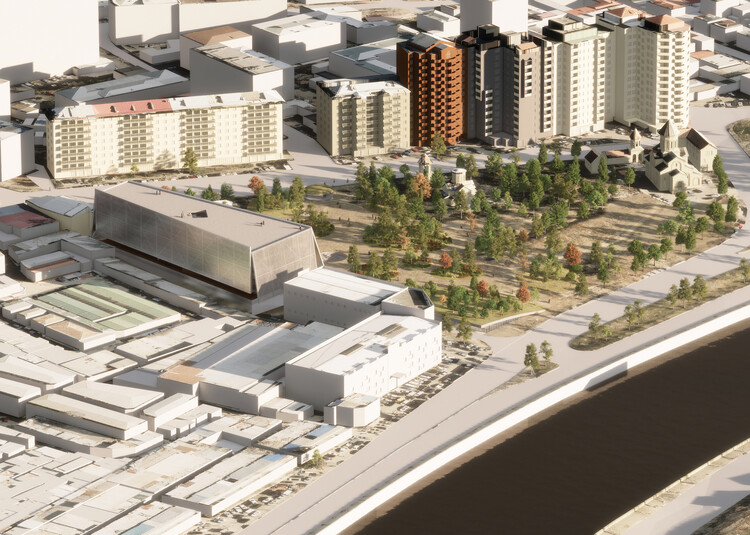
Across diverse contexts, from Bangkok and Jakarta to Florence, Athens, Tbilisi, and Stropkov, these proposals explore different modes of public engagement: the reuse of heritage sites, the redesign of pedestrian networks, the reinvention of urban corridors, and the creation of new civic landscapes through ecological and cultural strategies. Some focus on reconnecting communities through inclusive design, while others transform industrial materials into new urban ecologies or reinterpret historical forms to support contemporary civic use. Together, they demonstrate how unbuilt work can test new spatial models, challenge existing urban conditions, and anticipate more generous and adaptive public realms.


